
Action Games









Action Games reward quick reactions, clear aim and good timing. The player moves, shoots, drives or fights under pressure, and success depends on how fast a decision turns into a result. This page covers what the category includes and how to find a title that matches your reflexes.
Reflexes, Timing and Positioning
Three skills carry most Action Games. Reflexes decide how quickly you respond to a new threat, timing decides when to attack or retreat, and positioning decides whether the first two matter at all. A player with average reflexes but good positioning often beats a faster one who stands in the open.
Practice helps all three, but not equally. Reflexes improve slowly, while positioning improves as soon as you start noticing cover, corners and exits.
Weapons and How They Feel
A weapon is more than a damage number. Recoil, reload time, range and sound shape how it feels in your hands, and a modest pistol can be more satisfying than a rifle if the feedback is good. Action Games with a wide arsenal let you test these differences quickly.
Many titles also include melee options, thrown items and vehicles used as weapons. Dude Theft Auto, with its ragdoll physics and exaggerated hits, treats these tools as a source of comedy as much as combat.
Enemy Behavior and Difficulty
Enemies make or break the category. Predictable enemies become tedious after an hour, while enemies that flank, retreat and call for help keep fights unpredictable. Good Action Games give each enemy type a clear role, so you know what to do the moment you see one.
Difficulty can grow through numbers, speed or new behaviors. The best curve adds one new idea at a time and lets you master it before adding the next.
Fighting in Dense Cities
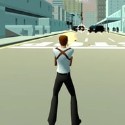
City settings change combat in useful ways. Buildings provide cover, alleys create chokepoints, and traffic becomes an obstacle or a weapon. Action Games set in urban areas often let you escape one fight by stealing a car and starting a different one at the next intersection.
Verticality adds another layer. Rooftops, fire escapes and parking structures give sniper positions and escape routes that flat maps cannot offer.
Controls and Comfort
Control quality is easy to overlook until it fails. Delayed input, unclear button layouts and poor camera behavior can ruin a title with otherwise good design. Check whether you can rebind keys, adjust sensitivity and change the field of view.
Things worth checking before a long session:
- Can aim sensitivity be changed without restarting?
- Does the camera stay stable during fast turns?
- Are switching weapons and entering vehicles on separate keys?
- Does the interface show health and ammunition clearly?
Learning Curves and Early Mistakes
New players of Action Games often make the same mistakes. They stand still while firing, ignore cover and run out of ammunition at the worst moment. These habits are natural, and most titles allow time to fix them in early missions.
A practical way to improve is to focus on one skill per session. Spend one session on aim, another on movement and a third on managing resources. Action Games reward this kind of deliberate practice more than they reward long unfocused sessions.
Advanced players add small refinements: switching weapons before reloading, using doors to separate enemies and listening for footsteps. None of these require special equipment, only attention.
Sandbox Comedy and Serious Combat
The category covers a wide tonal range. At one end, serious combat titles demand precision, and a single mistake ends the attempt. At the other end, comedy-driven Action Games let you launch vehicles, collide with pedestrians and enjoy the physics. Neither end is superior, and many players switch between them depending on mood.
Players who want tension should look for strict damage models and limited resources. Players who want relaxation should look for generous health, forgiving checkpoints and open maps where there is no failure state.
Many of the best Action Games sit between the two, offering both a serious campaign and a place to experiment without consequences.
Audio and Feedback in Fast Titles
Sound tells you what is happening faster than the screen can. A footstep behind a wall, the click of an empty magazine and the rising pitch of a siren all help you react before you see the cause. Action Games with clear audio feedback let you play with less guesswork and more confidence.
Visual feedback works the same way. Hit markers, screen shake and damage indicators confirm that an action landed. When Action Games get this feedback wrong, even a well-designed fight feels flat.
Choosing Between Short Bursts and Long Sessions
Some Action Games suit five minutes of play, with quick respawns and simple goals. Others reward an hour of focus, with missions that build toward a boss or a set piece. Know which one you want before you start, because the wrong match leads to frustration.
Browse the full catalog on GTA5InBrowser and note which entries start fast and which build slowly. Try one of each, compare how they feel, and keep the one that fits your schedule and reflexes. The Action Games category has room for both styles, and the right choice depends on how you like to play.