
Dead Paradise: Race Shooter



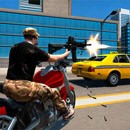



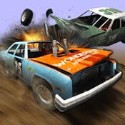



You slam into a rusted guardrail at speed, missiles cooking off against the grille of a truck that's been chasing you since the last checkpoint. That's a normal moment in Dead Paradise: Race Shooter, a game that treats racing and gunfighting as one activity instead of two modes bolted together.
Why Dead Paradise: Race Shooter Doesn't Play Like a Normal Racer
Most racing games ask you to worry about one thing: the road ahead. This one adds a second concern — whatever's trying to kill you from the side or rear — and expects both handled without slowing down. The core loop is less "win the race" and more "survive the road you're on," since plenty of missions skip a finish line entirely.
New players treat shooting as secondary, something to do only when a car gets close. That habit gets punished once tougher enemies show up in numbers, since reacting late costs more than clearing threats early. Players expecting a point-to-point race get caught off guard by how often the road is really an arena dressed up as a highway.
Ten Death Cars, and the Reaper Isn't the First One You'll Trust
Ten unlockable death cars and monster trucks each balance speed, armor, and weapon mounting differently. The Reaper sits near the fast end, trading the bulkier trucks' survivability for the ability to outrun trouble instead of absorbing it. Most players default early to something like the heavily armored Tank, since a slower vehicle that eats a few hits is more forgiving while enemy patterns are unfamiliar. Moving to the Reaper later changes the rhythm — threading gaps replaces trading hits, and the shooting feels reactive rather than planned.
Upgrading Missiles, Armor, Engine, and Fuel
Credits earned from missions go toward four categories: missiles, armor, engine, and fuel. Missiles raise damage, armor adds effective health, engine pushes top speed, and fuel extends how long a vehicle can be pushed hard before it suffers for it. Spreading points evenly across all four is a common mistake, since difficulty spikes past what shallow upgrades can handle. Fuel gets overlooked the most — newer players rarely realize a failure point is often running dry mid-chase, not losing a gunfight.
Ninety Levels Across Highways, Ruined Towns, and Desert Arenas
The campaign spans ninety levels across three environments. Highways favor speed and clean sightlines, town levels bring tighter corners and more cover for enemies, and desert arenas open into something closer to an all-out battleground than a race. By the desert-arena stretch, the game has mostly stopped pretending to be a race — these stages lean into arena-survival pacing, where outlasting enemies matters more than crossing a line first.
The Eight Mission Types That Keep Dead Paradise: Race Shooter From Repeating Itself
Missions aren't limited to one format. Across the campaign, players run into eight distinct types:
- Survive the Chase — break through enemy patrols and traps.
- Boss Chase — destroy a boss vehicle and its escort.
- Wasteland Cleanup — clear an area of hostile vehicles.
- Time Attack — destroy a set number of bandits before time runs out.
- Stealth Strike — slip past patrols to destroy an enemy base.
- Race Against Time — grab a car and weapons fast.
- Convoy Escort — keep an escorted vehicle alive.
- Arena Survival — outlast waves of enemies in an enclosed space.
Stealth Strike throws off players used to the usual encourage-aggression pacing, since being spotted is suddenly the failure condition instead of reacting too slowly.
What Players Actually Run Into
Dead Paradise: Race Shooter holds a strong reputation, with a 4.3 average across tens of thousands of ratings, but the recurring complaint is pacing around gas and gold, the two resources gating how much gets played in one sitting. Running dry on either pushes players toward ads to top back up, and a campaign that otherwise moves well starts feeling like it stalls.
Questions Players Ask About Dead Paradise: Race Shooter
- Is it more about racing or shooting? Both at once, but most mission types — Boss Chase, Wasteland Cleanup, Arena Survival, Convoy Escort — are judged on combat outcomes, not finishing position, so combat is never optional.
- What's the fastest way to unlock the Reaper? Mission credits buy vehicles and upgrades; since the Reaper trades armor for speed, most players unlock it once they're comfortable dodging instead of tanking damage like the Tank does.
- Why do Stealth Strike missions feel so different? They flip the usual logic — staying undetected is the objective, punishing habits built up during Wasteland Cleanup or Arena Survival.
Dead Paradise: Race Shooter earns its place among post-apocalyptic car-combat games by never letting players settle into one rhythm — a desert-arena survival stretch plays nothing like a Stealth Strike run past a patrol line, and the Reaper handles nothing like the Tank parked next to it in the garage.